Fikret Özdemir, a Man of Action
About 7 min read
Read by an artificial voice. Arabic passages and footnotes are not read.
Translated from the Turkish original.Read the original
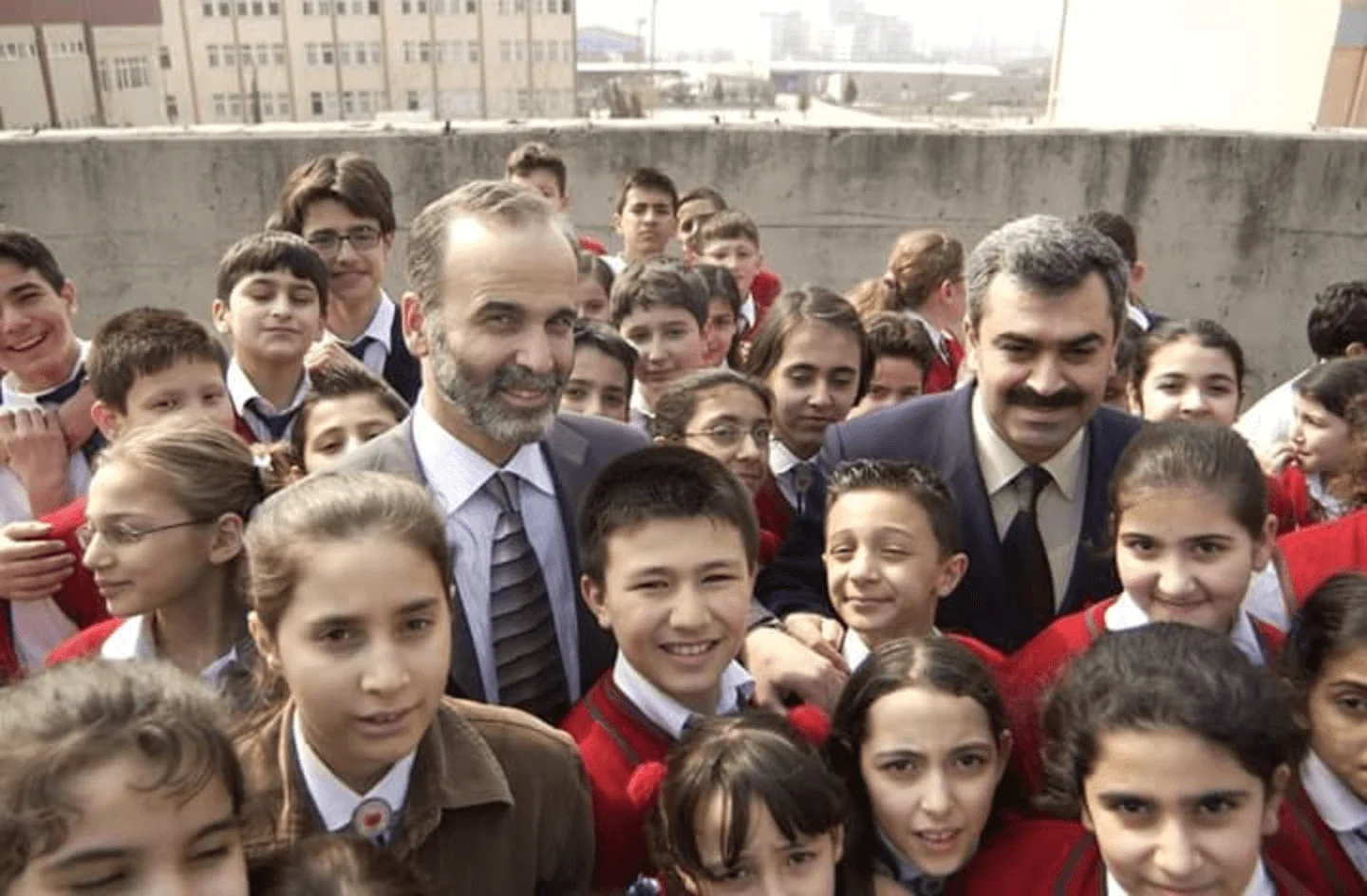
I have known my elder brother Fikret for more than twenty years. We came to know each other more closely after I came to Istanbul in 1995. He had graduated from Malatya Imam Hatip High School before us. What has stayed in my memory from that time is our watching him in the school plays; in that period we had not become closely acquainted. But when I bring him to life in my mind, he had a very lively personality that could not stay still.
His father was from Çemişkezek, but he himself was born and raised in Malatya. Indeed, he was known among those around him as a man of Malatya. After finishing Imam Hatip High School he won a place at the Faculty of Law of Istanbul University and graduated from there. While he was studying at the Faculty of Law he worked in his brothers' wedding dress business. He was one of the students who both worked and continued at university. After graduating he also obtained his licence as a lawyer and practised law for a time. I had visited their wedding dress shop in Fatih, Istanbul, several times. There too he both worked and held discussions of ideas with those beside him. He was a personality who thought about events, questioned them and reasoned about them. Because he was a law graduate, his power of reasoning was also quite strong. For the power of reasoning gives a person the ability to analyse events in depth and to penetrate them. He used this power of his very well.
The most important and prominent side of Fikret was that he stood together with civil society organisations and was present in the field of the press and culture. He was the managing editor of İmza Dergisi, the magazine published by the esteemed man of ideas Ali Gümüş, which remained in publication for a long time and strove for the understanding of Islamic thought. He also worked at Değişim Dergisi, a magazine that has been in publication since 1993. In addition, for a long time he was the chairman of the board of AKDAV (Aksa Education and Solidarity Foundation), which was founded in 1995. He also became one of the active members of the Lawyers Association (Hukukçular Derneği), which was founded by Muslims.
In the process of the postmodern coup of 28 February 1997 the headscarf had been banned. The universities were being shaped in line with this order of the coup. Foremost among them was Istanbul University. Kemal Alemdaroğlu, an enemy of the headscarf, had been appointed as rector. His task, instead of improving the quality of education and teaching and increasing scholarly work, was to expel our students who wore the headscarf from the university. He carried out this task with heart and soul. The Muslims, for their part, began to struggle against these hostile attitudes aimed at exclusion and at destroying the freedom of worship. At that time the most important part of the struggle of Mazlum-Der, which had been founded in Turkey to protect and defend human rights, became the headscarf. A headscarf commission, made up almost entirely of women, was set up at once. The lawyer Fikret Özdemir was brought to the chairmanship of this commission. Fikret accepted this task gladly. Thus he became one of the pioneers of the headscarf struggle. I too was a volunteer in this commission, and most of the time we were together with Fikret. Our daughters who were struggling for the headscarf at the universities came to know the lawyer Fikret Özdemir and always found him at their side.
Against the headscarf bans, which first began at Istanbul University in September 1997, Fikret was one of the distinguished personalities, like Sabiha Ünlü, Hasibe Turan, Ahmet Mercan, Ayşe Böhürler, and the lawyers Şadi Çarsancaklı, Macide Göç Türkmen, Şeyma Dövücü, Necip Kibar, Cüneyt Toraman and Ahmet Selamet, who were the first to react, who sought the rights of the students, who stood beside the wronged students against the pressure of all the security forces and who struggled for rights. At whichever university the headscarf ban was put into practice, a delegation from the headscarf commission went there at once, made statements and offered its material and moral support to our women students. This was a great boost to the morale of our daughters.
At the same time this commission organised meetings with all our civil organisations and looked for ways of solving this problem. It was truly a very hard process. Our women students were being expelled from the universities one by one, and the women in public service who wore the headscarf were being dismissed from their posts. In the court cases that were opened in this process, all our lawyers worked with heart and soul and as volunteers. The headscarf commission under the chairmanship of Fikret had accomplished together this duty of struggle, which was carried out on many fronts. Later this struggle widened and continued in a more systematic way.
In the 1999-2000 school year we were together again with Fikret. He was the chairman of the board of Bilim College, and we were teachers. Throughout that year we were together in many places as well. He also took on active duties in the associations of private education. He took many steps to make private education productive and of high quality.
One day at the school I was free and spent a few hours with him. He told us his memories and his struggle with cancer. Two years after he had married and his son Ömer had been born, he had been struck by cancer. He had said that he fought against cancer for a long time and that the course of treatment was continuing. He had said that after the chemotherapy his hair and his eyebrows fell out, that his appearance became frightening and that children were afraid of him. He said: at one point I begged Allah with all my heart and soul and prayed: "O Allah! If You heal me, I will devote the rest of my life to Your way." He had even said: before this prayer I asked many people to forgive me any rights they had over me. He said: this prayer of mine was accepted, praise be to Allah. At that moment I said:
"My brother, it would be very good if you put this struggle of yours down in writing and wrote your life. For our other patients it would be an example, lived and experienced, of how to struggle. Even a feature film could be made of it."
"I am writing it too," he said. We were very glad at this. Sometimes he would bring us the drafts he had written and read them. But these writings of his were left unfinished; his life did not suffice to complete them. I am personally one of those who witnessed his life after his prayer was accepted. He lived his life as he had promised in his prayer; he did not run after money and wealth, rank and position. He always spent his life taking an interest in Islamic struggles and in the problems of the Muslims, and trying to find solutions for them.
This life, so full, spent in action and struggle, came to an end in this world on 18 September 2007, at a young age. After the funeral prayer performed at the Fatih Mosque he was buried in the Eyüp cemetery in Istanbul. He had now set out at the starting point of a new life, the eternal life. May our Lord have mercy on him, may his place be Paradise and his soul be glad. May He grant patience especially to his son Ömer, to his wife, to his brothers and sisters and to all his relatives.
TopicsPersonalities