Yusuf al-Qaradawi's Fiqh of Da'wa and the Influence of His Translated Works in Turkey
About 32 min read
Translated from the Turkish original.Read the original
Abstract
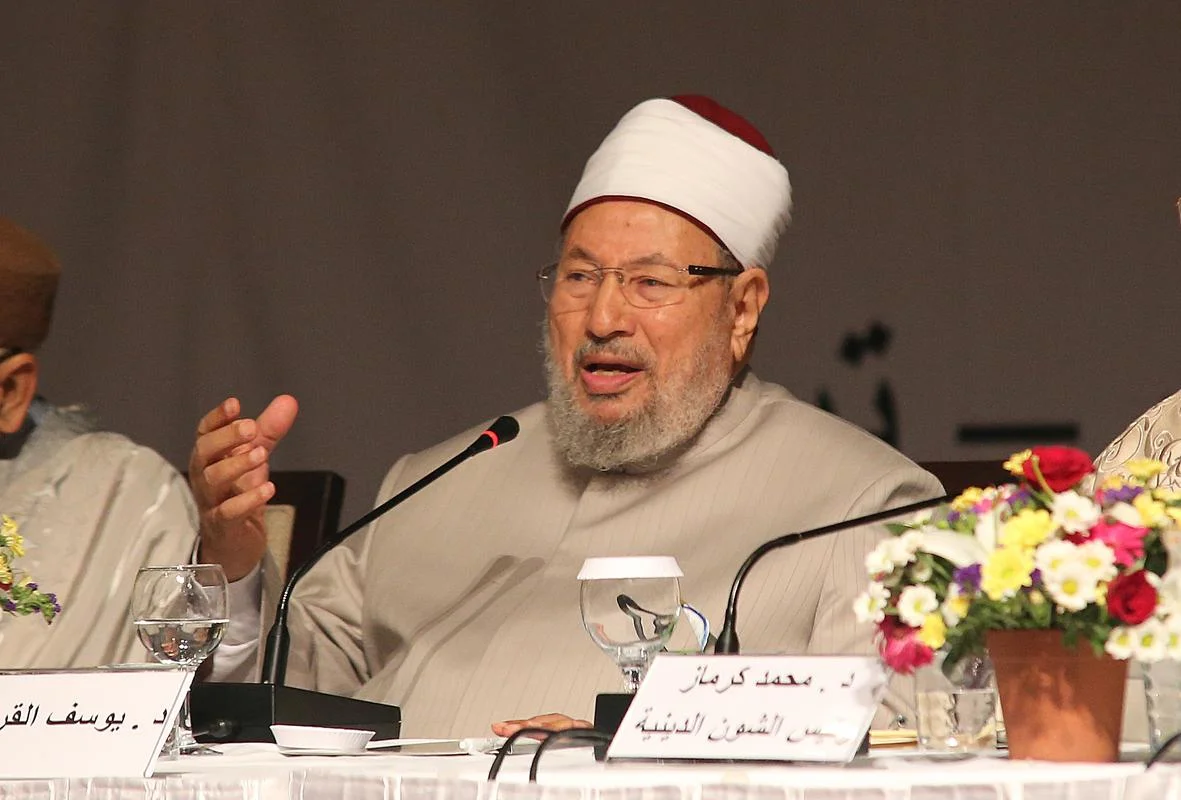
In this article we have dwelt on the fiqh of da'wa (the call to Islam) of Yusuf al-Qaradawi and on the influence of his translated works on society in Turkey. Yusuf al-Qaradawi was born on 9 September 1926 in the town of Saft Turab in Egypt, has more than a hundred works, has taught at many universities and continues to serve as president of the International Union of Muslim Scholars.
The aim of the study is to identify and bring out the basic features of al-Qaradawi's da'wa, the style and principles he laid down for da'wa, his all-embracing understanding of da'wa and his approach to Islam as a whole.
In a sense he has written the methodology of the Islamic da'wa with his own life, his da'wa and his works. In addition, the aim is to underline the importance of al-Qaradawi, who over a period of about fifty years has been the most translated author in Turkey and whose works have been brought into Turkish, and his influence on Turkey, by stating to which branches of knowledge his translated works belong and by giving short explanations of their contents.
Keywords: Yusuf al-Qaradawi, da'wa, fiqh, Turkey, translated works
Introduction
Yusuf al-Qaradawi was born in the second quarter of the 20th century, in a period after the First World War when the Ottoman State had been brought down by the Western colonial powers and the Muslims had been defeated. He witnessed the torment and hardship that Muslims suffered both in his own country and in other Muslim countries, and as a man of learning he carried out very serious work on how deliverance from this should come about.
One field that holds a very important place in al-Qaradawi's work has been da'wa and the determination of the fiqh of da'wa. Throughout his life he himself has been inside the da'wa; at the same time he has formed its theory and lived its practice.
As a prolific writer, al-Qaradawi has written many works, and his works have been translated into several languages. A great many of his books have been translated into Turkish, and thousands of printings have been made up to the present day. Many of these books still continue to be published in new editions.
We have shaped our article on the basis of two main headings: al-Qaradawi's fiqh of da'wa and the influence of his translations in Turkey.
I. The Fiqh of Da'wa
Da'wa is one of the basic principles of the call to Islam. All the prophets were the pioneers, the practitioners and the role models of this call. In the last divine message there is a call to Islam, to faith, to the way of Allah, to the Book of Allah, to good, to what is true, to the source of life, to salvation and to peace. In the earlier divine messages too there are calls similar to these, for all of them are nourished from the same root and source.
Naturally this da'wa will have its methods and its determinants. To assess and set out the methods in the course of history forms the fiqh of the matter. In forming this fiqh it is useful to determine the methods of da'wa, the qualities that must be found in the person who is to carry out the da'wa, and the need for the fiqh of da'wa to be continually brought up to date.
1- The Methods He Followed in Da'wa
In a life of da'wa of more than half a century, al-Qaradawi has tried to set out the methods of da'wa through various activities such as putting forward new ideas, presenting works and giving lessons. We may gather these methods under the following headings:
- Every Muslim is addressed by the da'wa and can invite everyone to his faith. The principle found in the Qur'an and the Sunna of "giving counsel, enjoining what is right and trying to turn people away from what is wrong" is the basis of this.
- Good intention and sincerity (ikhlas) are a condition in da'wa. A da'wa that does not rest on good intention and sincerity comes to nothing and brings harm instead of benefit.
- Da'wa must conform to scholarly principles and rest on proofs. It is not possible to carry on the activities of da'wa without knowledge.
- The caller must live the religion of Islam in his practice and be a good example.
- Da'wa must be carried out on the principle of addressing people's minds. Not to observe this rule may turn the da'wa away from its aim and overturn everything.
- Attention must be paid to priorities in the subjects to which people are to be called. Creed comes before deeds, acts of worship before dealings, the obligatory before the supererogatory, and major sins before minor sins.
- Attention must be paid to stages in da'wa. A separate style of da'wa must be chosen for each phase of a person's age.
- The fundamentals of the religion must be approached as a whole and comprehensively, and the da'wa must be carried out within this framework.
- Good character and good upbringing must be the essential identity of the caller.
- It is a basic principle to keep away from words and conduct that would lead to division among Muslims. For this reason disputed questions should not be brought onto the agenda.
When attention is paid to these principles, it is seen that they focus on three main matters. The first is the caller who is to carry out the da'wa, the second is those who are addressed by the da'wa, and the third is the subject of the da'wa. The fiqh of da'wa shows itself in all three fields. We may divide it into three: the fiqh that the caller must observe when calling to Islam, the fiqh of the questions that are the subject of da'wa, and the fiqh that is needed in determining those to be addressed on the path of da'wa. It is this fiqh that must be attended to in conducting and organising the activity of da'wa.
2- The Basic Qualities of the Caller
The caller has more need of knowledge and equipment than anyone else. Al-Qaradawi identifies very important principles concerning the equipment of the caller and dwells on them carefully. But before these principles he states that the caller must prepare himself well, strengthen his faith, be a person of good character, and equip himself against ignorance, the desires of the self, domination and corruption.
On this equipment, his work entitled "The Culture of the Caller" alone contains extensive explanations. We may list these principles as follows:
a- Islamic culture: This comes through learning, becoming acquainted with and knowing the fundamentals of the religion of Islam. At the head of this comes becoming acquainted with and knowing the first source, the Book of Allah, the Noble Qur'an. This in turn is possible through being well versed in the sciences of the Qur'an, learning well the inimitability and the narratives of the Book, and using examples in their place. The verses must be presented as a whole and comprehensively. It is essential to avoid wrong interpretations, Isra'iliyyat in tafsir, and weak and fabricated reports. One must also keep away from corrupt views.
The second source in this matter is the Sunna of the Messenger of Allah (peace and blessings be upon him). Another important field in the study of the Sunna is the science of sira, which takes the life of the Prophet as its subject. When learning the sciences of hadith one must also use the hadiths in their proper place. One must learn the sound hadiths well and beware of hadiths that are hard to understand and of baseless and fabricated (mawdu') hadiths.
It is also important for a caller to know the science of fiqh and the knowledge relating to acts of worship, dealings and manners. He must know the schools of law, the history of the schools, the differences between them and the reasons for these, and must not exaggerate in the secrets and wisdoms of the acts of worship. At the same time he must learn the principles relating to usul al-fiqh. By learning these methods he gains the faculty of addressing both the mind and the heart. Tasawwuf, which is the way of living the morals, the feeling, the manners and the virtue of Islam, must also be known by the caller. Within this scope the order of Islam must also be learned as a whole.
b- Historical culture: The caller must go down into the depths of history and penetrate events. He must analyse broadly the events that have taken place in history and know well both his own history and the history of his enemies.
c- Culture of language and literature: The importance of language and literature in presenting the divine message is great. The Noble Qur'an set out its expressions from beginning to end in a literary style, and the Messenger of Allah (peace and blessings be upon him) used Arabic eloquently. Using language well in da'wa is very important.
d- Human culture: Islam, as a religion, addresses the human being. For this reason the human being must be known very well, materially and spiritually. Sciences that aim to know the human being, such as psychology, sociology, biology, ethics, philosophy and pedagogy, must be learned by the caller.
e- Scientific culture: Islam has given great value to knowledge and to scholars. In many places in the Qur'an knowledge is exalted and ignorance is condemned. Our Prophet too gave importance to knowledge and scholarly activity throughout his life and always supported them.
f- Culture of current affairs: To know and be acquainted with current affairs and to take an interest in them is also very important for a caller. He must be aware of what is happening in his country and in the world and must try to interpret it correctly.
3- Bringing the Fiqh of Da'wa up to Date
Yusuf al-Qaradawi has shown the bringing up to date of the fiqh of da'wa in actual fact through the practice of his life. He has not remained silent before the events developing around him and in the world, and in his identity as a man of learning and a caller he has openly declared what needed to be said.
Al-Qaradawi carried the matter beyond words and took a step towards action and institution building, founding the "International Union of Muslim Scholars", which is one voice and one heart for the Muslims. Apart from this he has served in many institutions or been their founder.
He has not remained silent before any event that has taken place and developed around him; as a Muslim caller and man of learning he has stated what ought to be and has shown where he stands. It is useful to explain in particular the events that have developed in the last three years and al-Qaradawi's manner of policy and his fiqh towards them.
In Egypt he stood against the military coup that on 3 July 2013 overthrew the legitimate president and abolished the constitution, and he maintained that it was not legitimate. He declared that the presidential elections held by the military coup were also invalid and unjust, and he called the people of Egypt to a boycott. He stated that Israel's practices against al-Masjid al-Aqsa must be resisted and that this holy place must be defended by all Muslims. He likewise demanded that Israel's blockade of Gaza be lifted and condemned Israel's practices in this matter. He put forward a peace proposal for the crisis that arose among the Muslim Brotherhood in Egypt, and this proposal was accepted by the Brotherhood. Thus he personally played the part of arbiter in disputes among Muslims and acted as mediator. In the question of Syria he rejected Russia's intervention and its playing the part of an occupier, and stressed that Russia must be opposed. Al-Qaradawi, who at every opportunity brings up the need for Muslims to be far from extremism and violence and to be moderate, opposed the declaration of the caliphate by al-Baghdadi, the leader of ISIS, and stated that this was not possible.
II. The Influence of His Translations in Turkey
The works of Yusuf al-Qaradawi, who has worked in many fields, were translated into Turkish in the 1960s and have continued to be published at an increasing pace for fifty years. The great majority of the works have been published in Istanbul, the capital of learning and culture; they have also been translated and published in many cities of Anatolia. Today Nida Yayıncılık, which operates in Istanbul, continues to publish all his works under the heading "The Collected Works of Yusuf al-Qaradawi".
In Turkey the 1960s in particular are a period in which Islamic books began to be translated and published intensively. Here we shall try to give al-Qaradawi's translated books in numbers by periods of ten years. Three translated works were published in the 1960s, 3 in the 1970s, 8 in the 1980s, 13 in the 1990s, 12 in the 2000s, and 17 from the 2010s to the present. Sometimes one work has been published by several publishing houses. Those published without a date are outside these numbers. In addition, Nida Yayıncılık has placed the publication of 8 works by Yusuf al-Qaradawi in its publishing programme for 2016-2017. If it goes on like this, 25 to 30 works will have been published in the last ten-year period, that is, by the year 2020. Up to the present, 28 different publishing houses in Turkey have translated and published the works of al-Qaradawi, and according to our findings 44 works in all have been translated. In the footnotes we have given the bibliographical details of these books in full and added at the end the number of pages in which the translated work was printed in Turkish.
If we speak of the print runs of the works: in the 1960s and 1970s publishers printed on average 5000 to 7000 copies at each printing, in the 1980s and 1990s 3000 to 5000, and in the 2000s and 2010s 1000 to 2000. Speaking with this in mind, we can comfortably say that thousands of copies of each book, and of some books tens of thousands, have been printed and distributed.
The works of the master have for more than fifty years been among the books that the Muslims of Anatolia have read a great deal and reflected in their practice. Since the 1960s these books have been read in the hands of all Muslims like textbooks. In the 1980s in particular these works became the handbooks of the young. In the 1990s and afterwards they were also taught to students as supplementary textbooks in a number of madrasas and universities. One of the most important factors in the fact that Turks, Kurds, Arabs, Circassians, Georgians, Abkhaz and groups of other ethnic origins living in Anatolia live the religion of Islam on a generally moderate line has been the example of Yusuf al-Qaradawi in the matter of moderation. He has a great part both in the correct understanding of Islam and in the taking root of Islamic thought. The fact that his works have been translated and published in increasing numbers in every period also points to this. In Turkey, Yusuf al-Qaradawi is the only person who, as an author from outside the country, has had so great a number of works translated and published by many different publishing houses.
We may state in the following four points how his influence in Turkey can be seen concretely:
a- The works of al-Qaradawi have been translated and published by 28 different publishing houses. This is the finest proof that he has found acceptance in Turkey and is followed with interest. These publishing houses are: Hilal, Saff, Nida, İhtar, Özgün, Şurâ, Çıra, İhya, Kayıhan, Tahir, Ravza, Bir, Marifet, İz, İdrak, Rey, Faisal, Akyol, Risale, Nun, Akabe, İkbal, Denge, Dini Neşriyat, Madve, Nur, İlke and Şule.
b- They have been published in Istanbul first of all, and in Malatya, Ankara, Erzurum, Konya, Kayseri and Izmir. The work of publishing has spread across Anatolia.
c- His translated works have gone through many printings from the 1960s to the present and have been printed and sold in the thousands.
d- The printing of his collected works by Nida Yayınları is the highest level of the acceptance of al-Qaradawi's works and of the interest shown in him.
All this shows that al-Qaradawi, as a man of learning and of action, has been and continues to be influential in Turkey.
These translated works are directed to many fields of knowledge, such as creed and kalam, the science of fiqh, usul al-fiqh, the science of hadith, the methodology of hadith, the science of tafsir, the methodology of tafsir, Islamic economics, education and teaching in Islam, Islamic morals, sociology, the religion of Islam, Islam and political science, and the fiqh of conveying the message and of da'wa. It is useful to state the works published on these within each field of knowledge.
1- Creed and kalam
a- Published under the title İman ve hayat ("Faith and Life"). In this work the topics relating to creed and the science of kalam are studied and the connection of faith with life is treated. Original title: al-Iman wa'l-Hayat.
b- Published at three different times under the titles Tevhidin hakikati ("The Reality of Tawhid"), Allah’ın varlığı ve tevhidin hakikati ("The Existence of Allah and the Reality of Tawhid") and Tevhidin hakikatleri ("The Realities of Tawhid"). In this work the topics relating to creed and the science of kalam are studied and the real dimension of tawhid is treated from many sides. It has been translated and published at different dates by various publishing houses and translators. Original title: Haqiqat al-Tawhid.
c- Published under the titles Tekfirde aşırılık ("Extremism in Takfir") and İman ve İslâm’da itidal ("Moderation in Faith and Islam"). In this work the topics relating to creed and the science of kalam are studied; in particular it dwells on the disease of extremism and of declaring others unbelievers, which became widespread in the last quarter of the 20th century and in the 21st century and which has torn the Islamic world apart and weakened it, and a way to a solution is set out. Original title: Zahirat al-Ghuluww fi'l-Takfir.
d- Published under the title İnsan ve Hak mefhumu ("The Human Being and the Concept of Truth"). In this work the topics relating to creed and the science of kalam are studied, and it dwells on how Islam looks at the concept of truth and right (haqq). Original title: al-Nas wa'l-Haqq.
e- Published under the title Allah’ın varlığı ("The Existence of Allah"). In this work the question of the existence and oneness of Allah is studied together with its proofs.
2- The science of fiqh
a- Published under the title İslâm’da helal ve haram ("The Lawful and the Prohibited in Islam"). In this work the lawful and the prohibited things in Islam are explained at length and many fatwas on the subject are included. Original title: al-Halal wa'l-Haram fi'l-Islam.
b- Published under the title İslam’da ibadet mefhumu ("The Concept of Worship in Islam"). This work dwells on the concept of worship in the religion of Islam and treats worship in detail. Original title: al-'Ibada fi'l-Islam.
c- Published under the title Öncelikli meseleler fıkhı ("The Fiqh of Priority Questions"). In this work he tried to explain, in the light of the Qur'an and the Sunna, the questions that Islamic fiqh takes up as priorities and their method. Original title: Fi Fiqh al-Awlawiyyat: Dirasa Jadida fi Daw' al-Qur'an wa'l-Sunna.
d- Published under the title Müslümanlar Gayri Müslimlere nasıl davrandı? ("How Did Muslims Treat Non-Muslims?"). In this work, how Islamic fiqh treats dhimmis and citizens under covenant, the position of these persons in society and the principles of living together are studied, and examples are given from history. Original title: Ghayr al-Muslimin fi'l-Mujtama' al-Islami.
e- Published in two volumes under the title İslâm hukukunda zekât: Fıkhu’z-zekât ("Zakat in Islamic Law: Fiqh al-Zakat"). This work speaks of zakat, one of the basic acts of worship of Islam. The question of zakat in Islamic fiqh is studied in depth and assessed from the point of view of the questions of our day. Original title: Fiqh al-Zakat.
f- Published in seven volumes by different publishing houses under the title İslâm’ın ışığında çağdaş meselelere fetvalar ("Fatwas on Contemporary Questions in the Light of Islam"). This work is made up of fatwas containing solutions to the questions of our day. Original title: Hady al-Islam: Fatawa Mu'asira.
g- Published under the title İslam hukuku: teori-pratik ("Islamic Law: Theory and Practice"). In this work contemporary Islamic thought is brought up, and it is proved with its evidence that Islamic law can be applied in every age both in theory and in practice.
h- Published under the title İslam hukuku: evrensellik-süreklilik ("Islamic Law: Universality and Continuity"). In this work it is studied at length that Islamic fiqh is universal and can be applied in every time and place.
Original title: Shari'at al-Islam: Khuluduha wa Salahuha li'l-Tatbiq fi Kull Zaman wa Makan.
i- Published under the title Oruç fıkhı ("The Fiqh of Fasting"). In this work the rulings on fasting are brought up to date and explained in detail. Original title: Fiqh al-Siyam.
j- Published under the title Filistin hakkında fetvalar ("Fatwas on Palestine"). This work contains the fatwas given on the occupation of Palestine and the questions connected with it.
3- Usul al-fiqh
a- Published under the title Kur’an ve sünnet ışığında İslâm fıkhını yeniden okumak ("Reading Islamic Fiqh Anew in the Light of the Qur'an and the Sunna"). In this work the method of Islamic fiqh is treated and the questions of method are brought down to our day. Original title: Taysir al-Fiqh li'l-Muslim al-Mu'asir.
b- Published under the title Öncelikler fıkhı: Fıkhu’l-evleviyyat ("The Fiqh of Priorities: Fiqh al-Awlawiyyat"), and also under the titles Öncelikli meseleler fıkhı ("The Fiqh of Priority Questions") and Öncelikler fıkhı ("The Fiqh of Priorities"). In this work an attempt is made to explain, in the light of the Qur'an and the Sunna, the questions that Islamic fiqh takes up as priorities and their method. Original title: Fi Fiqh al-Awlawiyyat: Dirasa Jadida fi Daw' al-Qur'an wa'l-Sunna.
c- Published under the title Günümüzde fetvanın değişebilirliği ("The Changeability of the Fatwa in Our Day"). In this work the position of the fatwa in terms of method and the question of its change according to the time are discussed.
4- The science of hadith
a- Published under the title Bilgi ve medeniyet kaynağı sünnet ("The Sunna as a Source of Knowledge and Civilisation"). In this work the Sunna and the noble hadiths are studied as the source of Islamic civilisation and knowledge. The Sunna is interpreted as the field of the Prophet's application of the religion. Original title: al-Sunna Masdaran li'l-Ma'rifa wa'l-Hadara.
b- Published under the title Sünneye münasebetimiz nice olmalıdır ("What Should Our Relation to the Sunna Be"). In this work the position of the Sunna is studied.
5- The methodology of hadith
a- Sünneti anlamada yöntem ("Method in Understanding the Sunna"); later the same book was published under the title Sünnet araştırmalarına giriş: Sünneti anlamada yöntem: Sünnetin teşri değeri ("Introduction to Sunna Studies: Method in Understanding the Sunna: The Legislative Value of the Sunna"). This work speaks both of Islamic thought and of the methodology of hadith.
6- The science of tafsir
a- Published under the title İbrahim suresi tefsiri ("Tafsir of Sura Ibrahim"); in this work the tafsir of Sura Ibrahim is given.
7- The methodology of tafsir
a- Published under the title Kur’an’ı anlamada yöntem ("Method in Understanding the Qur'an"). This work states the principles needed in research into the Qur'anic sciences and sets out the methodology of tafsir. Original title: Kayfa Nata'amal ma'a al-Qur'an al-'Azim.
8- Islamic economics
a- Published under the title Faizsiz sistemde ticaret (murabaha) ("Trade in the Interest-Free System (Murabaha)"). Trading in Islamic economics and the question of interest are taken up and studied in detail.
b- Published first under the title Fakirlik problemi karşısında İslam ("Islam in the Face of the Problem of Poverty") and later under the title Fukaralık ve İslam ("Poverty and Islam"). In this book Islam's view of poverty and economic security are studied sociologically and economically. The principles of the religion in this matter are stated in detail. Original title: Mushkilat al-Faqr wa Kayfa 'Alajaha al-Islam.
9- The fiqh of conveying the message and of da'wa
a- Published by different publishing houses under the titles Nasıl bir kültür-davetçinin kültürü ("What Kind of Culture: The Culture of the Caller"), Kültür yapımız ("The Structure of Our Culture") and Müslümanın temel kültürü ("The Basic Culture of the Muslim"). It is a book of da'wa that speaks of the structure, the methods and the fields of application of the Islamic da'wa. Original title: Thaqafat al-Da'iya.
b- Published under the title Papaya cevabımız (İslâm kılıçla mı yayıldı) ("Our Answer to the Pope (Did Islam Spread by the Sword)"). In this work the concepts of Islamic da'wa and jihad are studied, and an attempt is made to answer by a correct method the perception that the papacy maintains with the claim that the religion of Islam spread by the sword.
c- Published under the titles Allah’a giden yolda 1-Niyet ve ihlas ("On the Road to Allah 1: Intention and Sincerity") and Allah’a giden yolda 2-Rabbani hayat ve ilim ("On the Road to Allah 2: The Godly Life and Knowledge"). These works state that the most important provisions of people who work in the way of Allah are intention, sincerity, a godly life and knowledge.
10- Islam and political science
a- Published under the title Ümmeti parçalayan ithal çözümler ("The Imported Solutions That Divide the Umma"). This work dwells on the solutions that have been brought from outside to be applied to the Islamic umma and that do not agree with the fabric of the umma. Within this framework the policies concerning the religion of Islam and its adherents are studied.
b- Published under the title Tek çare İslami çözüm ("The Only Remedy: The Islamic Solution"). In this work it is set forth, with its reasons and proofs, that holding fast to the religion of Islam is the only remedy for the salvation of the umma. According to this book, when the other political solutions too are taken into account, it is clear that what is inescapable for the Muslims is Islam.
c- Published under the title Her müslüman’ın ortak davası Kudüs ("Jerusalem, the Common Cause of Every Muslim"). In this work Jerusalem, al-Masjid al-Aqsa, the first qibla of the Muslims, and relations between Jews and Arabs are laid on the table, and it is stressed that this question is the essential question of all Muslims. Original title: al-Quds Qadiyyat Kull Muslim.
d- Published under the title İslâm ümmeti hayal mi gerçek mi? ("The Islamic Umma: Illusion or Reality?"). This work is a refutation written against those who put forward the claim: "The Islamic umma consists of nothing but a claim and an illusion." It proves that the Islamic umma is a living reality and that these claims are baseless. Original title: al-Umma al-Islamiyya Haqiqa la Wahm.
e- Published under the title İslâm ve laiklik: tarihi hesaplaşma ("Islam and Secularism: A Historic Reckoning"). In this work the policy of religion and state, the view of Islam on this matter and the question of secularism are studied. Original title: al-Islam wa'l-'Almaniyya Wajhan li-Wajh.
f- Published under the title İman ve İslâm’da itidal ("Moderation in Faith and Islam"). In this work various pieces on the religion of Islam are written. It dwells on the necessity of a moderate understanding of religion, and on this point subjects of creed and kalam are also studied.
g- Published under the title İslâm’da devlet mefhumu ("The Concept of the State in Islam"). In this work the understanding of politics of the religion of Islam and its view of the concept of the state are studied.
h- Published under the title Âlim ve tağut ("The Scholar and the Tyrant"). In this work the features of tyrannical, oppressive and bad rule are written in the form of a play. The scenes concerning the defence of Sa'id ibn Jubayr, one of the scholars of the generation of the Successors, against the tyrant al-Hajjaj ibn Yusuf al-Thaqafi, governor of Iraq in the Umayyad period, and his being put to death afterwards are told in a literary manner.
11- The religion of Islam
a- Published under the titles İslâm ve sapıkların iftiraları ("Islam and the Slanders of the Misguided") and İftiralar ve şüpheler karşısında İslam ("Islam in the Face of Slanders and Doubts"). In this work information is given about the religion of Islam, and an attempt is made to answer the claims and slanders put forward by the misguided and the liars. Original title: al-Islam bayna Shubuhat al-Dallin wa Akadhib al-Muftarin.
b- Published under the title İslâmi uyanışın problemleri ("The Problems of the Islamic Awakening"). In this work extremism and moderation are treated, and the problems that extremism brings to the awakening of the Muslims are voiced. It is stated that the civilisation and culture formed by the religion of Islam are far from extremism. Original title: al-Sahwa al-Islamiyya bayna al-Tatarruf wa'l-I'tidal.
c- Published under the title İslâm’da çevre bilinci ("Environmental Awareness in Islam"). In this work the importance of the environment for human life and the value Islam gives to the environment are studied in detail.
d- Published under the title İhtilaf ve tefrikalar karşısında İslâmî tavır ("The Islamic Attitude in the Face of Disagreements and Divisions"). This work dwells on the situations caused both by disagreements in fiqh and by divisions in kalam, and on the ways to their solution. Here an attempt is made to show a Muslim point of view.
12- Sociology
a- Published under the titles Fakirlik problemi karşısında İslâm ("Islam in the Face of the Problem of Poverty") and Fukaralık ve İslam ("Poverty and Islam"). This work dwells on the problem of poverty and the solutions Islam brings to this problem. Islam's economic and sociological approach in solving the problem is also brought up. Original title: Mushkilat al-Faqr wa Kayfa 'Alajaha al-Islam.
13- Islamic morals
a- Published under the title Sosyal hayatta İslâmî terbiye: müslüman kardeşler pratiği ("Islamic Upbringing in Social Life: The Practice of the Muslim Brotherhood"). In this work the dynamics of spiritual development according to Islam and the question of upbringing and morals are studied. Original title: al-Tarbiya al-Islamiyya.
14- Education and teaching in Islam
a- Published under the title Hazreti peygamber ve ilim: ışığın çağrısı ("The Prophet and Knowledge: The Call of the Light"). This work dwells on the value that Islam and its Prophet gave to knowledge, on the guidance of knowledge and on the importance of education and teaching. Original title: al-Rasul wa'l-'Ilm.
b- Published under the title Hasan el-Benna mektebi ("The School of Hasan al-Banna"). In this work education and teaching in the religion of Islam are studied, and the relation of Hasan al-Banna, the leader of the Muslim Brotherhood, with education and teaching is assessed. Original title: al-Tarbiya al-Islamiyya wa Madrasat Hasan al-Banna.
Conclusion
We have tried to explain the formation and development of Yusuf al-Qaradawi's fiqh of da'wa and the final form it has taken. We have established that, in forming the fiqh of da'wa, al-Qaradawi set out many principles and stated them in his works. We have said that he classified these as the principles that must be at the heart of da'wa, the qualities that must be found in the caller, and the styles to which attention must be paid when da'wa is carried out, and that he dwelt on each of them in detail.
We have explained that, in forming the fiqh of da'wa, he also showed it in his practice through the institutions in which he served and which he founded and through his statements to the press.
We have stated that he is the author whose works have been most translated in Turkey, and that his works, written in many fields of knowledge, have been published by many different publishing houses and in various cities. The fact that so many works have been published in the thousands by different publishing houses and have gone through many printings shows the influence of al-Qaradawi with regard to the communities in Turkey. We have stated that the publication of his collected works has been begun by one publishing house and that these publications continue. This too expresses that the interest in al-Qaradawi in Turkey and his influence are at an advanced level. And of course, starting from the fields of the translated works, we can say that this influence has come about on the plane of the Islamic sciences, of thought and of understanding.
Bibliography
el-Karadâvî, Yusuf, Nasıl bir kültür-davetçinin kültürü (trans. M. Said Şimşek), Davet Yayınları, Konya, 1982.
el-Karadâvî, Evveliyatü’l-hareketi’l-İslâmiyye: fi’l-merhaleti’l-kadime, Müessesetü’r-Risâle, Beirut, 1992, 13. ed.
el-Karadâvî, Hasan el-Benna mektebi (trans. Galip Yavuz-Süleyman Koçak), İlke Yayınları, Istanbul, 1992.
el-Karadâvî, İman ve hayat, Hilal Yayınları, Ankara, 1979. 405 pp.; also (trans. Abdülvahhab Öztürk), Nida Yayıncılık, Istanbul, 2013.
el-Karadâvî, Tevhidin Hakikatı(trans. Hacı Mehmet Alptekin), Saff Yayıncılık, Malatya, 1986.
el-Karadâvî, Tevhidin Hakikatı(trans. İshak Turgut-M. Recai Gündüz), Nida Yayıncılık, Istanbul, 2012.
el-Karadâvî, Allah’ın varlığı ve tevhidin hakikati (trans. Abdullah Kara), İhtar Yayıncılık, Erzurum, 1993.
el-Karadâvî, Tevhidin hakikatleri(trans. Mustafa Özel), Özgün Yayıncılık, Istanbul, 1996, 7. ed.
el-Karadâvî, Tekfirde aşırılık (trans. M. Salih Geçit), Şura Yayınları, Istanbul, 1998.
el-Karadâvî, İman ve İslam’da itidal (trans. Hanifi Tosun), Çıra Yayınları, Istanbul, 2006.
el-Karadâvî, İnsan ve Hak mefhumu (trans. Mustafa Ateş), İrfan Yayınevi, Istanbul, 1968.
el-Karadâvî, Allah’ın varlığı (trans. Muhammed Recai Gündüz), Nida Yayıncılık, Istanbul, 2014.
el-Karadâvî, İslam’da helal ve haram (trans. Ramazan Nazlı), Hilal Yayınları, Istanbul, [n.d.], (first edition 1965) 7. ed.
el-Karadâvî, İslam’da helal ve haram (trans. Mustafa Varlı), Kültür Basın Yayın Birliği, Istanbul, 1990.
el-Karadâvî, İslam’da ibadet mefhumu (trans. Hüsameddin Cemal), Nida Yayıncılık, Istanbul, 2014.
el-Karadâvî, Öncelikli meseleler fıkhı (trans. Abdullah Gündüz), Nida Yayıncılık, Istanbul, 2011, 3. ed.
el-Karadâvî, Müslümanlar Gayri Müslimlere nasıl davrandı? (trans. M. Beşir Eryarsoy). İhya Yayınları, Istanbul, 1985.
el-Karadâvî, İslam hukukunda zekat: Fıkhu’z-zekat (trans. İbrahim Sarmış), Kayıhan Yayınları, Istanbul, 1984.
el-Karadâvî, İslamın ışığında çağdaş meselelere fetvalar (trans. Veysel Bulut), Tahir Yayınları, Istanbul, 1994. (2 vols.), vol. 3 (trans. Vahdettin İnce), Ravza Yayınları, Istanbul, 1996. (vols. 4, 5, 6, 7) (trans. Harun Ünal), Tahir Yayınları, Istanbul, [n.d.].
el-Karadâvî, İslam hukuku: teori-pratik (trans. M. Nuri Doğan), Bir Yayıncılık, Istanbul, 1983.
el-Karadâvî, İslam hukuku: evrensellik-süreklilik (trans. Yusuf Işıcık-Ahmed Yaman), Marifet Yayınları, Istanbul, 1997. Also Nida Yayıncılık, Istanbul, 2012.
el-Karadâvî, Oruç fıkhı (trans. Hüseyin Öresin), Nida Yayıncılık, Istanbul, 2008.
el-Karadâvî, Filistin hakkında fetvalar (trans. İzzet Marangozoğlu), Nida Yayıncılık, Istanbul, 2009.
el-Karadâvî, Kur’an ve sünnet ışığında İslâm fıkhını yeniden okumak (trans. Abdullah Kahraman), Nida Yayıncılık, Istanbul, 2012.
el-Karadâvî, Öncelikler fıkhı: Fıkhu’l-evleviyyat (trans. Abdullah Kahraman), İz Yayıncılık, Istanbul, 2007.
el-Karadâvî, Öncelikli meseleler fıkhı (trans. Abdullah Gündüz), Nida Yayıncılık, Istanbul, 2011, 3. ed.
el-Karadâvî, Öncelikler fıkhı (trans. Abdullah Kahraman), Nida Yayıncılık, Istanbul, 2015.
el-Karadâvî, Günümüzde fetvanın değişebilirliği (trans. Mithat Acat-M. Mihdi Acat), Nida Yayıncılık, Istanbul, 2011.
el-Karadâvî, Bilgi ve medeniyet kaynağı sünnet (trans. Özcan Hıdır), Nida Yayıncılık, Istanbul, 2012.
el-Karadâvî, Sünneye münasebetimiz nice olmalıdır, İdrak İctimai Birliyi, Baku 2011.
el-Karadâvî, Sünneti anlamada yöntem (trans. Bünyamin Erul), Rey Yayıncılık, Kayseri, 1993, 2. ed.
el-Karadâvî, Sünnet araştırmalarına giriş: Sünneti anlamada yöntem : Sünnetin teşri değeri (trans. Bünyamin Erul), Nida Yayıncılık, Istanbul, 2009.
el-Karadâvî, İbrahim suresi tefsiri (trans. Muharrem Turan), Nida Yayıncılık, Istanbul, 2015.
el-Karadâvî, Kur’an’ı anlamada yöntem (trans. Mehmet Nurullah Aktaş), Nida Yayıncılık, Istanbul, 2015.
el-Karadâvî, Faizsiz sistemde ticaret (murabaha) (trans. Nihat Yazar), Faisal Finans Kurumu kültür yayınları, Istanbul, [n.d.]
el-Karadâvî, Fakirlik problemi karşısında İslam (trans. Abdülvehhap Öztürk), Nur Yayınları, Ankara, 1975.
el-Karadâvî, Fukaralık ve İslam (trans. Avni İlhan), Akyol Matbaa Ortaklığı, Izmir, 1976.
el-Karadâvî, Nasıl bir kültür-davetçinin kültürü (trans. M. Said Şimşek), Davet Yayınları, Konya, 1982.
el-Karadâvî, Kültür yapımız (trans. M. Ali Seraceddin), Risale Yayınları, Istanbul, 1985.
el-Karadâvî, Müslümanın temel kültürü (trans. Mehmet Ali Yekta Saraç), Risale Yayınları, Istanbul, 1995, 3. ed. and (trans. Mehmet Akbaş), Nida Yayıncılık, Istanbul, 2008.
el-Karadâvî, Papaya cevabımız (İslâm kılıçla mı yayıldı), Nun Yayıncılık, Istanbul, 2007.
el-Karadâvî, Allah’a giden yolda 1-niyet ve ihlas (trans. Savaş Kocabaş), Nida Yayıncılık, Istanbul, 2008.
el-Karadâvî, Allah’a giden yolda 2-Rabbani hayat ve ilim (trans. Savaş Kocabaş), Nida Yayıncılık, Istanbul, 2008.
el-Karadâvî, Ümmeti parçalayan ithal çözümler (trans. Resul Tosun), Akabe Yayınları, Istanbul, 1990.
el-Karadâvî, Tek çare İslami çözüm (trans. Ahmet Bedri), İkbal Yayınları, Ankara, [n.d.], 2. ed.
el-Karadâvî, Her müslüman’ın ortak davası Kudüs (trans. İzzet Marangozoğlu), Nida Yayıncılık, Istanbul, 2010, 2. ed.
el-Karadâvî, İslâm ümmeti hayal mi gerçek mi? (trans. Mehmet Akbaş), Nida Yayıncılık, Istanbul, 2008.
el-Karadâvî, İslâm ve laiklik: tarihi hesaplaşma (trans. Osman Arpaçukuru), Denge Yayınları, Istanbul, 1994.
el-Karadâvî, İman ve İslâm’da itidal (trans. Hanifi Tosun), Çıra Yayınları, Istanbul, 2006.
el-Karadâvî, İslâm’da devlet mefhumu (trans. Hüsameddin Cemal), Nida Yayıncılık, Istanbul, 2013.
el-Karadâvî, Âlim ve tağut (trans. Ahmet Pakalın), Çıra Yayınları, Istanbul, 2007.
el-Karadâvî, İslam ve sapıkların iftiraları (trans. İbrahim Ural), Dini Neşriyat Kitabevi Yayınları, Konya 1969.
el-Karadâvî, İftiralar ve şüpheler karşısında İslam (trans. Ahmed Asal), Madve Yayınları, Istanbul, 1987.
el-Karadâvî, İslami uyanışın problemleri (trans. Hasan Fehmi Ulus), Risale Yayınları, Istanbul, 1986, 2. ed.
el-Karadâvî, İslâm’da çevre bilinci (trans. Mithat Acat-M. Mihdi Acat), Nida Yayıncılık, Istanbul, 2011.
el-Karadâvî, İhtilaf ve tefrikalar karşısında İslâmî tavır (trans. Ersan Urcan), Nida Yayıncılık, Istanbul, 2012.
el-Karadâvî, Fakirlik problemi karşısında İslâm (trans. Abdülvehhap Öztürk), Nur Yayınları, Ankara, 1975.
el-Karadâvî, Fukaralık ve İslam (trans. Avni İlhan), Akyol Matbaa Ortaklığı, Izmir, 1976.
el-Karadâvî, Sosyal hayatta İslâmi terbiye: müslüman kardeşler pratiği (trans. Galip Yavuz- Süleyman Koçak), İlke Yayıncılık, Istanbul 2002.
el-Karadâvî, Hazreti peygamber ve ilim: ışığın çağrısı (trans. Dilaver Selvi), Şule Yayınları, Istanbul, 1991.
el-Karadâvî, Hasan el-Benna mektebi (trans. Galip Yavuz-Süleyman Koçak), İlke Yayınları, Istanbul, 1992.